 Toolpath
.png)
• 85 min
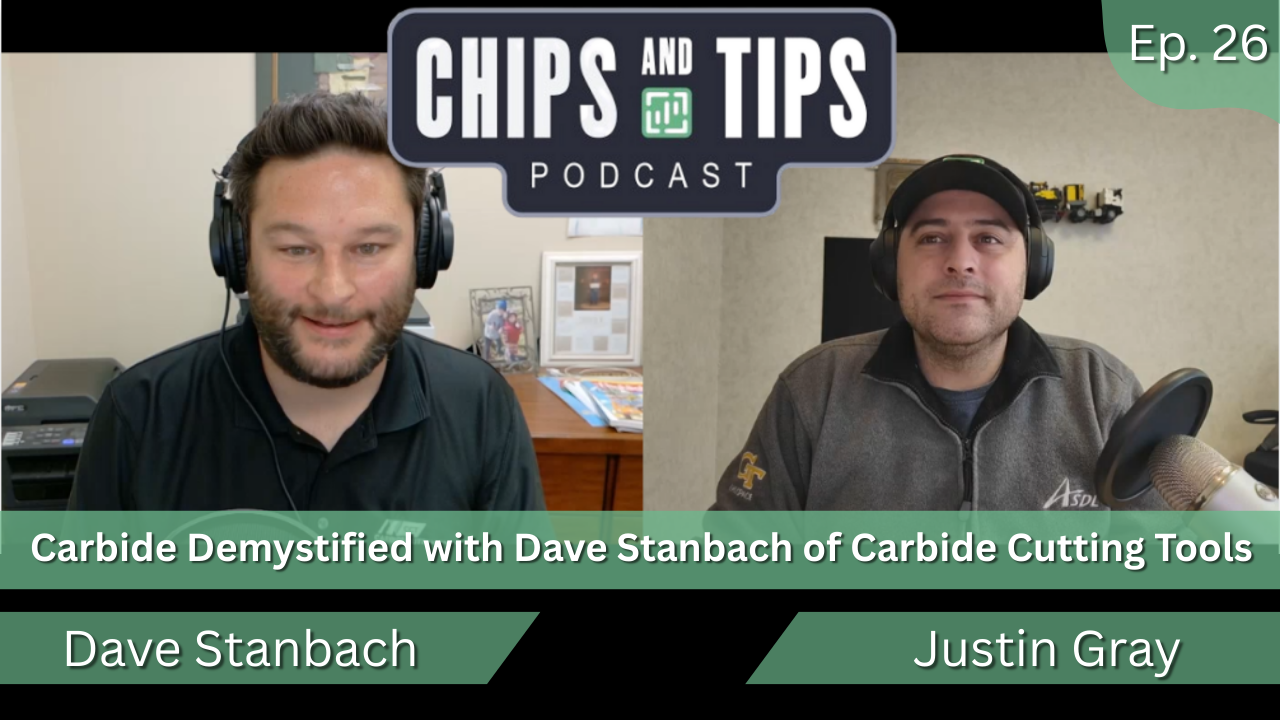
#26 Carbide Demystified with Dave Stanbach of Carbide Cutting Tools
Chips and Tips Podcast
Play


Most CNC shops are not slowed down by tooling choices. They are slowed down by the gap between what lives in CAM and what exists on the shop floor. In this episode of Chips and Tips, Justin is joined by Chris Zappettini to unpack tool library theory and explain why alignment matters more than optimization.
They walk through real examples from production shops, contract manufacturers, and prototyping environments, showing how small decisions around tools, holders, and data compound into major wins or major headaches.
Tool libraries are one of those topics everyone has an opinion on, but very few shops feel confident they have right. Justin and Chris Zappettini start the conversation by calling out a surprising reality. Many successful shops still have no formal tool library at all. Tools are rebuilt from scratch, cutting data is reentered manually, and consistency depends entirely on tribal knowledge. It works, until it does not.
From there, the discussion moves into a more uncomfortable truth. A poorly maintained tool library can be worse than having none. Libraries filled with tools that are not built, not available, or not accurate speed up programming while slowing everything else down. The disconnect between CAM and the machine creates rework, wasted setup time, and unnecessary risk.
A major focus of the episode is tool identification. Justin and Chris Zappettini argue that tool numbers on the machine are secondary. What matters is giving every rotating assembly a unique ID that changes whenever the physical tool changes. Stick out, holder, or configuration changes mean a new tool. This single decision enables auditing, protects old programs, and creates long term clarity across machines and programmers.
They also challenge the idea that you need the perfect system before you start. Tool libraries should begin small and grow naturally. One machine. One cell. A handful of common tools. By living with the system and adjusting it over time, shops avoid overengineering and build confidence through use rather than theory.
The episode pushes back hard on the belief that fast turn or prototype work makes tool libraries impractical. In reality, consistent tools improve throughput by reducing uncertainty. Even if the cutting is not perfectly optimized, parts get on the machine faster, run more predictably, and come off with fewer surprises. Optimization can come later.
Throughout the conversation, one theme keeps resurfacing. Always be auditing. Tool libraries are living systems. Tools age out, usage changes, and standards evolve. Shops that succeed treat their tool library as a reflection of reality, not an aspirational spreadsheet. When CAM matches the shop floor, everything downstream gets easier.
Watch My Tool Library Is Better Than Yours with Zap - Part 1